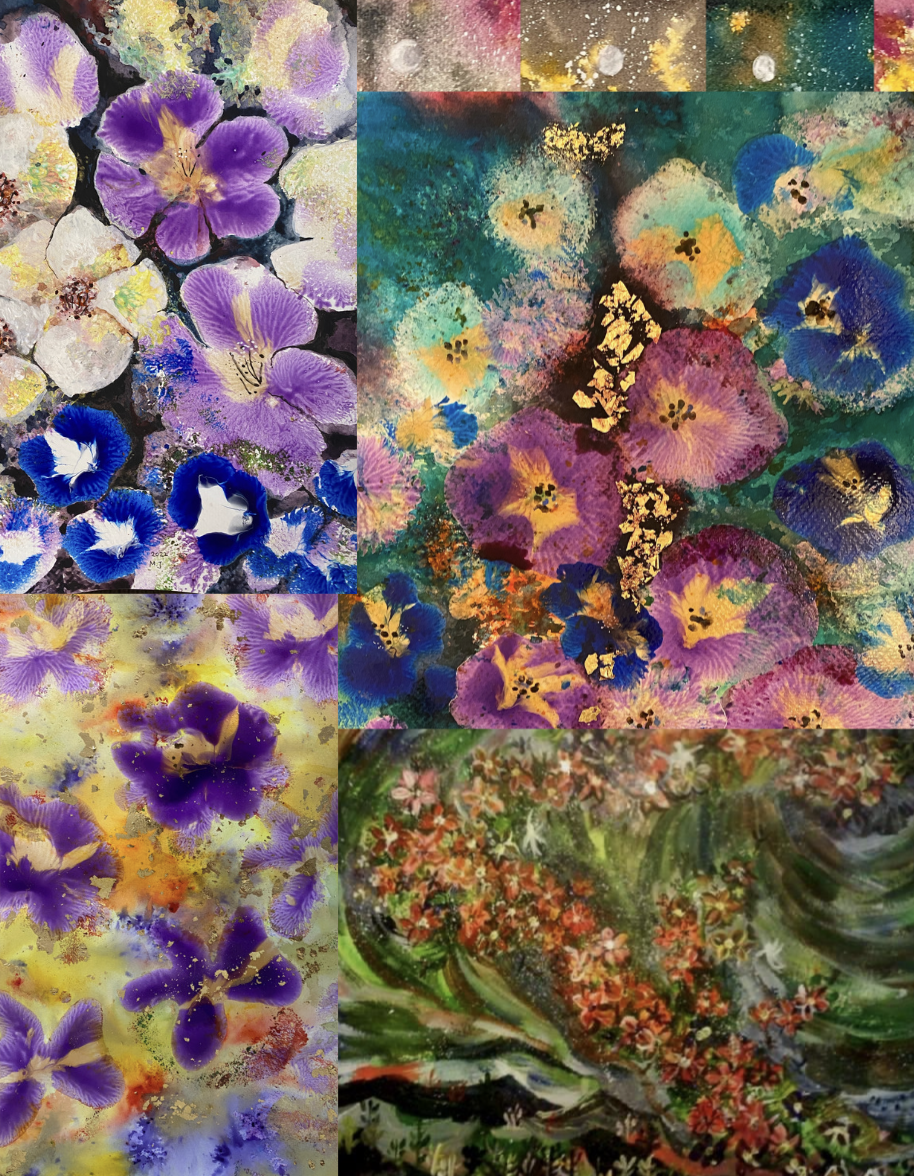
The Fate That Chose Me as an ArtistWhen we speak about artists, we often say that a person “has an artistic soul.” Yet this phrase reaches far beyond natural talent or technical ability. The artistic soul is not simply a skill; it is a way of seeing, feeling, and existing in the world. While some people might glance at a landscape and think only that it looks beautiful, someone with an artistic soul notices the movement of light, the quiet tension in the air, the subtle shift of emotion beneath the surface. They don’t just observe the scene—they read the invisible structure of feeling woven into it. An artistic soul is also shaped by an inner urge to express, something so essential that withholding it feels suffocating. For many, painting or writing is a hobby; for someone with an artistic soul, creation is a form of breathing. They grow restless when they cannot express themselves, and eventually they return to the brush, the instrument, or the page. For them, creativity is not a goal but a way of being. Every moment of life naturally flows into expression, and through that expression, they feel alive. One of the most powerful aspects of the artistic soul is its ability to bring the unseen into visibility. It transforms intangible emotions, shapeless memories, and silent atmospheres into color, line, rhythm, or story. Something that did not exist in the physical world takes form through the artist’s hands—a quiet kind of magic. This magic relies less on logic and more on intuition, sensitivity, and imagination. The artistic soul creates its own path forward, guided by something deeper than conscious thought. Yet the artistic soul is not fueled only by delight or inspiration. Pain, loneliness, confusion, grief—these become sources of depth and truth. Someone with an artistic soul does not hide their wounds; instead, they turn them into beauty. Sadness becomes richness of tone, loss becomes a deliberate pause or a soft edge, and hope becomes a delicate glimmer on the surface of the work. This emotional alchemy is one of the most remarkable capabilities of the artistic soul. Still, artistic sensitivity can make the soul fragile at times. Doubt visits often; the desire for perfection can be both a motivator and a burden. Even so, the artistic soul keeps moving. It may falter or hesitate, but eventually it returns to creation again and again. This quiet persistence, this return to the work despite uncertainty, is perhaps its greatest strength. Moreover, the artistic soul creates not just to release inner emotions but also to connect with others. It operates with the belief that somewhere, someone might recognize the feeling inside the work. When a viewer pauses, resonates, or feels comfort because of an artwork, it is a profound moment for the artist—a reminder that they are not alone, that their inner world has touched another’s. It is the moment when the artistic soul extends beyond itself and forms a bridge between lives. Ultimately, the artistic soul is the ability to see the world through the language of emotion and to express that language through form. It is deeper than technique, more enduring than talent, and more essential than recognition. It is not something that appears suddenly nor something that fades easily. It grows, deepens, and evolves through the experiences of a lifetime. And those who carry it walk through the world leaving small, quiet traces of their inner light—expressions that may be subtle in scale, yet powerful enough to move the heart. An intimate reflection on what the “artistic soul” truly is—an inner force, a lived experience, and a destiny that pulls an artist forward. A personal essay on the mysterious energy that drives creation, resilience, and the lifelong path of art. When we speak of artists, we often say that someone “has an artistic soul.” Yet when I reflect on this idea through the lens of my own experience, I realize that the artistic soul is not an abstract concept—it is something directly felt, an inner experience that presses itself into one’s life. If I did not possess this kind of soul, I would never have become an artist. Why I began walking this path, and why I am still walking it, is a mystery even to me. What I do know with certainty is that it did not begin simply because I was good at drawing. There are countless people who draw well—brilliantly, even—each in their own style. But to create paintings that feel alive, to sell them, and to continue living as an artist requires something far more extraordinary.
It requires something like a calling, something like a destiny that chooses you rather than the other way around. It is almost shamanistic, as though one has been granted a fate that cannot be escaped. Henri Rousseau once described this sensation as something that descends through the crown of the head—an inexplicable intuition that drives the hand to paint. I deeply relate to this. Without sensing such raw, primal energy, Rousseau would never have endured the ridicule, dismissal, and scorn he faced throughout his life. Most people cannot walk a path that receives no recognition. But artists can keep walking—despite opposition, despite hardship—because they experience something extraordinary that sustains them from within. I experienced the same thing. These indescribable moments were what helped me stand firm and keep moving forward, even when faced with negative voices from others. The reason I could continue was simple: even if I quit and tried to turn back, I knew I would end up returning to this path anyway. That knowledge was as clear as destiny. In one way or another, I was meant to paint. There were many times in the past when I wanted to take a different road, to choose something easier, more conventional. But every time I tried, I felt another version of myself inside me protest violently. This realm we call the artistic soul kept pulling me back, refusing to let me go. But ironically, the moment I finally said “yes” to this path, all that internal resistance disappeared. Instead, I felt more peace, more comfort, more happiness. I no longer needed to battle my own inner voice. I simply needed to walk forward. And I continue to paint because the happiness I feel while painting is so profound. At times it feels as though I am floating outside my own body, immersed in a peaceful state where some force that is not quite me is painting through my hands. I sometimes feel as if my physical body is merely lending its brush to someone else. I call this experience the artistic soul. And I know other artists who share these same experiences. If someone says that my paintings feel alive or radiate energy, I believe them—because that is exactly what happens. I leave on the paper energies I cannot fully explain. Some elements arise through accident, others through intention, and many times even I cannot predict how the painting will finally resolve itself. These countless experiences, layered one upon another, are what shape an artist. Because the artist’s path is so complex and difficult, I hope that people will refrain from making rigid statements about what art “is” or “should be.” Even I continue to walk forward every day with a large question mark hovering over me. This, too, is part of the artistic soul—a journey made of mystery, surrender, and unwavering return.
0 Comments
Our Treehouse – Reflections from the publisherOur Treehouse has finally arrived. When you order the paperback version on Amazon, each copy is printed on demand. Every time I receive a newly printed book, I feel both excitement and worry about the printing quality. This edition has a slightly glossy finish, which gives it a refined look. However, the colors are not exactly the same as in my original paintings. Still, considering that it is print-on-demand, I am satisfied with the overall quality. I only wish the title on the cover were placed a little more to the left. I have already made a few revisions and uploaded the corrected version.
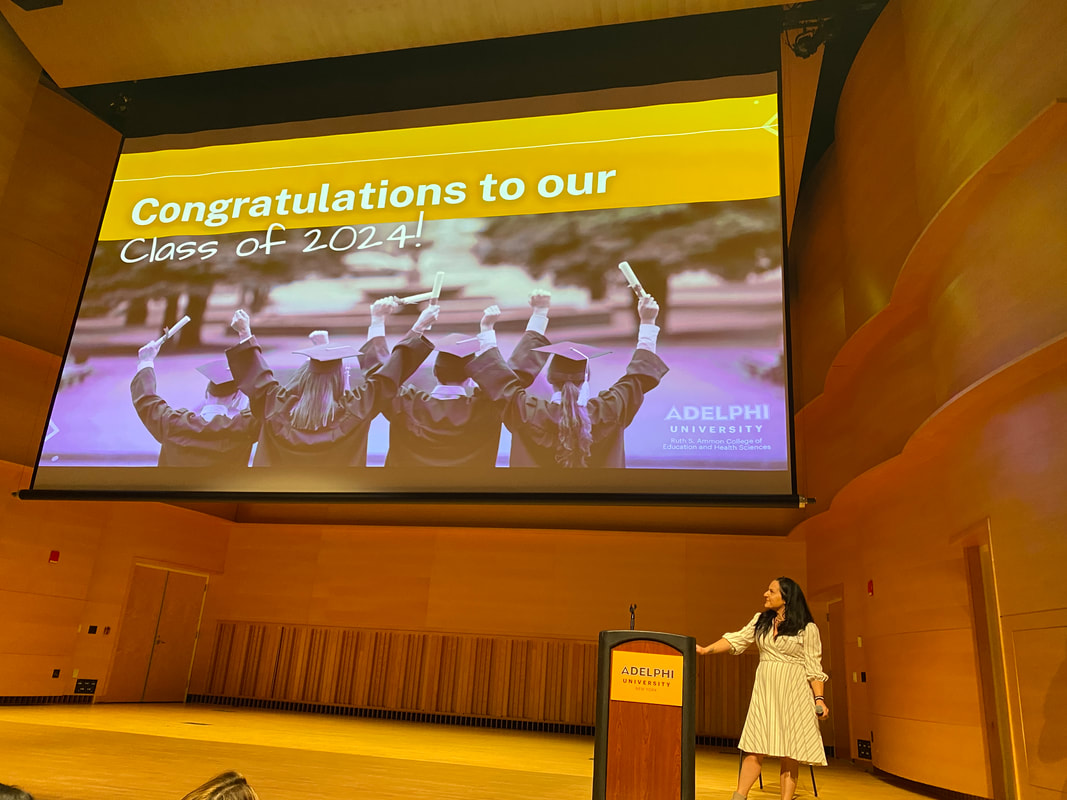
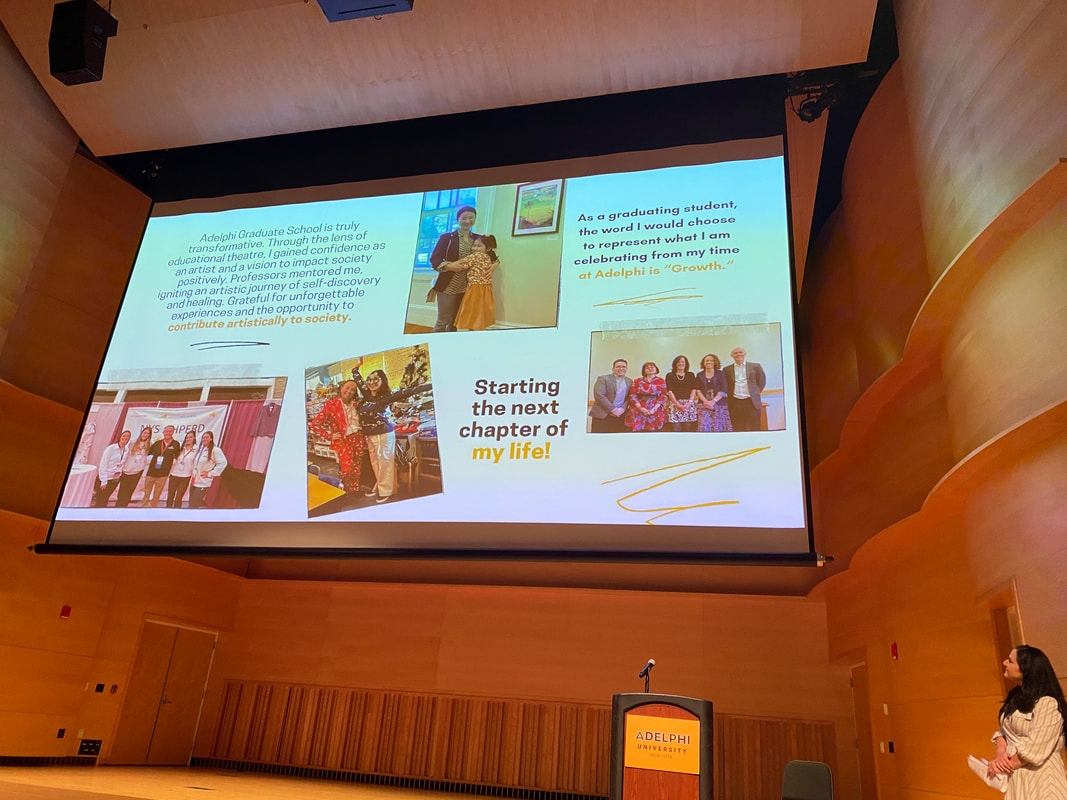
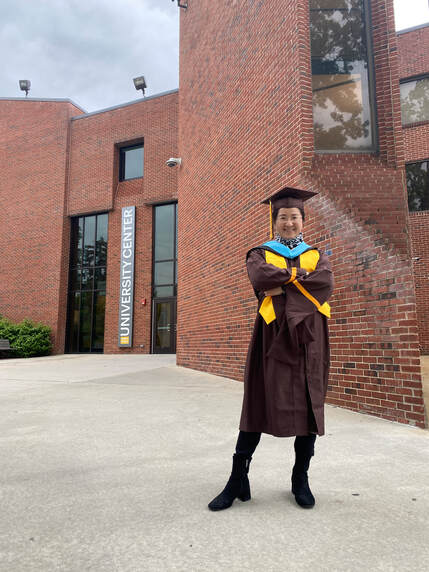
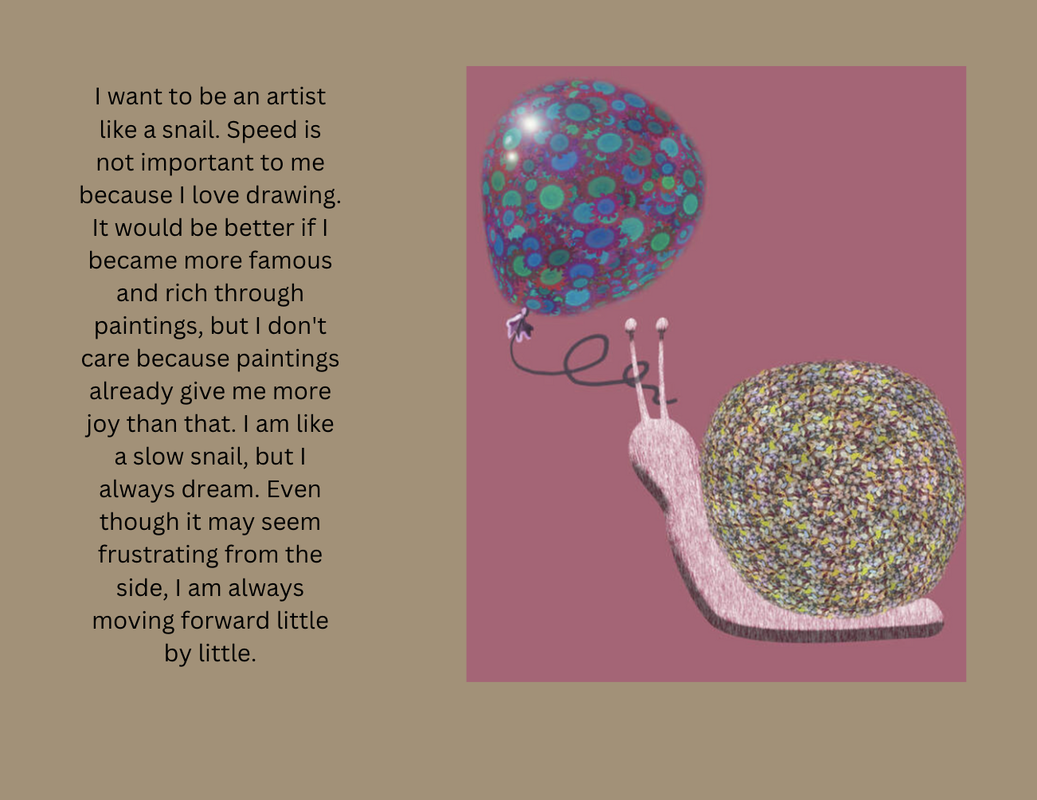
To my surprise, I discovered that a few copies had already been sold before the update. I sincerely apologize to those who purchased the earlier version. Yet, when I started this club and began creating books, I made a promise to myself: to let go of perfection. I didn’t want to be perfect. I wanted to be honest. I didn’t want to be commercial. I wanted to create something that feels like a batch of homemade cookies baked by a grandmother in a small countryside kitchen—warm, simple, and full of love. I wanted to make a picture book that is charmingly human—imperfect, tender, and rustic—something that artificial intelligence could never create. So, my books will never be perfect, and I am at peace with that. Still, I deeply appreciate everyone who purchased this book. Thank you for seeing beauty in imperfection. It has been about two years and ten months since I published my first book. My very first work, Hello, My Robin, was written while I was studying storytelling at Adelphi University. Since then, I have published about twenty-five books. Some were created together with my children and students, like a relay—passing stories, drawings, and imagination from one to another. Writing, illustrating, and imagining together has brought me immense joy. But when my stories appeared on Amazon, I entered a completely different world—one where you wait nervously for reviews, wondering how people will react. There are so many amazing books out there! Compared to them, my paperback books are thin, simple, and not perfect in print quality. The world is full of beautiful books—hardcovers, pop-ups, books with mirrors, fabric textures, and designs that shine like jewels. When I first decided to publish through Amazon, I asked myself for days if it was the right path. Hello, My Robin came easily—it was the story of a boy who refused to go to school after being bullied, but found hope again through a small bird named Robin. Honestly, I wrote it to impress my professor and earn an A+. At that time, I knew nothing about self-publishing. I paid a professional company about $500 to help me. Now, I handle the entire process myself—from cover design and illustration to layout and publishing. If I had kept relying on others, publishing 25 books would have cost me $12,500. After that first book was published, my professor, Dr. Bogg, requested a separate Zoom meeting just to praise my work. She said, “Bravo! Amazing!” and gave me my very first encouraging comment as an author. I still feel deeply grateful to her. One day, I hope my publishing journey grows enough for me to truly thank her in return. Since then, gratitude and the desire to do better have kept me going. Learning to manage every step of the process has made publishing deeply enjoyable. And slowly, my books began to sell. I never had high expectations. There are so many brilliant authors and beautifully marketed books in the world. I just wanted to write quietly, in my own corner, and find meaning in the process itself. And yet, people started buying my books. So once again, I want to thank each and every reader who has supported me. If you chose this book, I believe you value warmth over perfection. May that same warmth fill your life and everything you do. I know I still have a lot to learn, but I won’t stop. I will keep trying, keep creating, and keep sharing stories. That is why I founded Moms’ Playground Book Club and Kids author series—to continue writing stories with moms and children every year. Thank you for your encouragement, and please stay with us on this journey. — Anna Koh The Joy of Painting: My Journey with Koi FishThis year, my theme as an artist is simple yet profound — to find joy through painting. I no longer see art as something to be evaluated by how “well” or “poorly” one paints. Instead, I view it as a living, breathing act — like koi fish swimming freely and playfully through clear water. There is movement, energy, and delight in that image, and that is exactly what I wish to capture in my work.
When I paint, I feel an endless flow of energy and happiness. It is a source of joy stronger than almost anything else I’ve experienced. Through my koi paintings, I want to share this vitality — to show others that art can be a pathway to pure enjoyment and self-renewal. That is why I chose Koi Fish as the theme for my art classes this year. To my surprise, my students responded with incredible enthusiasm and curiosity. Watching them become absorbed in the colors, the water, and the graceful movement of the fish has been deeply rewarding. I even found myself thinking, I wish I had introduced this subject to them earlier. The popularity of my koi paintings is something I’ve witnessed firsthand — from the early days of my first solo exhibition in America to the recent display at the Port Jefferson Gallery, where the vibrant koi once again captured the hearts of many visitors. These experiences confirmed for me that this subject embodies something universal — a joyful rhythm of life that connects people across cultures and languages. So, as this year comes to an end, I have decided to go deeper — to explore and share more about my koi paintings as a way to express the boundless joy that art brings. Through these works, I hope others, too, can feel the same sense of freedom and delight that I find every time my brush touches the canvas. (c) Anna Koh – annakoh.com I Didn’t Choose Art. It Chose Me.Me Who Lived Like Fire, and the Water of Art A while ago, I saw a graph that visually showed the flow of my life. In Eastern philosophy, human temperament is explained by the five natural forces—fire, earth, metal, water, and wood. It was a graph that showed how strongly each of those five energies was established within me. Surprisingly, the energy of ‘fire’ was so strong within me, and there was almost no energy of ‘water’ to cool and circulate the fire. Ah, I thought, I have really been living a life that just kept burning. Sword and Fire Inside Me Another interesting thing is that I also have a cold and sharp metal energy inside me. When fire and metal meet in nature, they hurt each other. Fire melts metal, and metal cuts fire. They are so different that they collide when they meet. I know that very well. It burns hot and sharp, Maybe fire and sword were fighting inside me. At this time, the sword means logic and organization. In other words, it is like a warm candle, but there is a cool-headed thinking ability inside. But I didn't have water. I needed something to moderate the fight. That was the energy of 'water'. When fire meets water, it doesn't overheat, and metal becomes a cold but beautiful jewel. But I didn't have water inside me. So I often got tired, I couldn't express my feelings in words, and I lived like someone who was slowly burning out. So I started drawing One day, I started drawing. At first, it was just good, and it made me feel comfortable. Then, at some point, I realized. This wasn't just a hobby, it was a way to live for me. The stories I couldn't tell in words, The emotions I had buried deep inside my heart flowed out naturally in my drawings. Drawing was like 'water' to me. I purified myself with art My heart, which had been hot and sharp, became softer little by little as it met the flow of painting. The burning energy no longer burned me, but became a light that illuminated me. And that energy tempered the gold inside me. Only then did I realize. Art was not a choice, but survival. If I hadn't painted, I might have had to live as something other than myself. Now it's starting to flow little by little My mind has become much lighter recently. I can take care of myself by drawing at my own pace, without pushing myself as hard as I used to. I think I've finally found 'flow' in my life. Now I'm no longer someone who holds on by force, but someone who lives by purifying the fire and metal inside me with art. Art was my essence, and now it's time to live with that essence. Why I Had to Live as an Artist Everyone has their own way of living. Some people are good at talking, Some are good at taking care of others, Some feel secure in organizing and planning. I was a little different. I always had hot emotions inside me. When I got absorbed in something, I had to see it through to the end, And I was someone who lived with a single hurtful word for days. If it weren't for painting, I might have died. At that time, I started painting. I poured out emotions that could not be explained in words, with a brush, with colors, on paper. Surprisingly, after painting, I felt alive. It was as if my emotions had found a channel, and the weight deep inside my heart was slowly released. I knew then. This was not a hobby or an expression, but a way for me to survive. Painting is a mirror that reflects me, and the water that keeps me alive
The reason I had no choice but to do art is simple. Painting was the only tool to deal with the complex and intense world inside me. For me, art was a way to relieve emotions, a breathing hole that kept the balance of life, and at the same time, the only bridge that could reach other people's hearts. Perhaps this was a small and quiet mission given to me. To comfort people's hearts with color rather than words, with temperature rather than theory. My mission is not to "draw well" but to "draw the real thing." I now know. Living as an artist is not about becoming "a person who draws well" but about becoming "a person who can draw my true emotions, my true story." Drawing is the balance of my life, the alchemy that turns the wounds inside me into light, and the reason I've been able to endure until now and the reason I'll continue to live. That's why I have to live as an artist. Art is not a choice for me, but an instinct, a destiny, and a path to recovery. I pick up my brush today, and pour a piece of emotion that cannot be explained in words onto the paper. And if that painting can be a small comfort to someone -- that's why I live as an artist. A Journey to Find My EssenceThrough the lens of Eastern elemental philosophy and personal experience, the artist reflects on discovering their core essence—refined metal illuminated by water—and invites others to explore their unconscious truth through intuitive drawing. When we are born into this world, we face these questions at some point. “Why was I born?” “How should I live?” When we are busy or wander around in a listless daily life, we suddenly realize that even though we know a lot and live our lives, we do not really know ourselves. What do I like? What colors, foods, and travel destinations do I prefer? Beyond such superficial tastes, What kind of person do I have as an essence? How does the energy inside me flow? Driven by these questions, I started studying Eastern philosophy. In the past, I considered fortune telling to be a superstition and did not believe in fatalism. I was independent and strong-minded, so I hated relying on something. However, this year, after experiencing a deep burnout, I began to look back on the things I had been missing. When people only look outward, they easily become exhausted, discouraged, and lonely. However, when we focus on our inner energy, explore and understand ourselves, only then do we recover, become stronger, and free. I felt this experience more clearly through the act of drawing. That is why I am still drawing, and I strongly recommend art activities as one of the most effective ways to recover your true self. The first clue to knowing myself: “My birthday” So where can I start to explore my essence? The answer is close by. It is my birthday, the time of my birth. The very moment we first connect with the world, The energy of that space and time forms our existence. Life after that is a journey to realize and harmonize that essence. So, I began a journey to find my ‘true self’ by looking at the essence contained in my birth date through the lens of Cosmic blueprint. This energy has the following characteristics: It is righteous and sensitive to essence, It has strong insight to distinguish between the real and the fake, It values principles and essence over emotions. It is delicate and pure on the inside, but it looks hard and sharp on the outside. People with this tendency often clash with the world or experience loneliness, But their essence is someone who tries to live a life connected to true values. Painting and Essence, and Me This painting I drew also symbolizes my spiritual essence. A lump that silently shines even in a dark background, It felt like an act of taking out my inner self and putting it in the light. It may look hard and heavy on the outside, but when the light touches it, the warmth and potential hidden inside are revealed. I unconsciously drew this painting before I explored this essence. Once we begin to understand our essence, we also start to understand why we are drawn to certain things-- whether it be a color, a piece of music, a place, or a person. We realize that these are not random preferences, but resonances with the energy that already lives within us. We begin to sense the vibrational patterns of our surroundings-- which environments nourish us, which people drain or empower us, and why certain dynamics either feel natural or deeply uncomfortable. Most powerfully, we start to understand the reasons behind conflicts with others. These are not always just personality differences or misunderstandings. They often stem from clashes between essential energies, from mismatched ways of processing the world. And as we follow the thread of our true nature, we begin to uncover the mission quietly hidden within it-- the reason we are meant to live this life. Knowing this brings profound clarity. Life is no longer a series of random events or external pressures, but rather a conscious journey toward alignment with who we truly are. That is why exploring our own essence and energy is such a vital process—especially for those of us who are exhausted from constantly looking outward, trying to keep up with the pace of other people’s lives. In a world that pulls our attention in every direction, this inward journey is not a luxury—it is a necessity. It is how we return to ourselves. How we remember who we are. And this is where art becomes essential-- as a practice of shaping, preserving, and releasing our essence into the world. Art is not merely about aesthetics or expression; it is the visible trace of an invisible inner process-- the way we translate energy into form, emotion into texture, and truth into line. This is what art is for me now: a quiet yet persistent act of meaning-making. A way of channeling who I am—through my hands, through color, through silence—into the fabric of the world. In a time when so many feel unrooted, reactive, and unseen, to know one's essence and live it through art is both an offering and a resistance. It is how I return to myself, and how I hope others might find themselves, too. As I explored my own elemental nature, I came to see how powerful it is to let the unconscious speak. So I encourage you, too-- try drawing your inner essence. Not with the intention to impress, but to understand. You may be surprised by what you already know, deep within yourself. Because sometimes, your hand knows your truth before your mind does. There is another, perhaps even more important reason why knowing your essence matters. When you begin to truly recognize and accept your core being, you come to a profound realization: you are already enough—just as you are. You are inherently valuable, not because of what you achieve or display, but because your existence itself carries meaning and weight. In that awareness, the need for external decoration begins to fall away. You stop chasing validation through appearance, performance, or perfection. Instead, you start listening more closely to what you truly need. Not what the world says you should want, but what your essence quietly longs for. To know your essence is to return home to yourself. It is the beginning of living—not from expectation, but from alignment. And when we truly reconnect with our essence, we no longer need to sparkle with artificial light. We don’t have to decorate ourselves with illusions or overcompensate for what we think we lack. Because when your energy aligns with your true nature, it begins to shine—not loudly, but unmistakably. In my own experience, even when I said nothing-- even when I tried to hide or downplay my presence-- someone would still notice. Because authenticity has a frequency. It cannot be silenced. When we are aligned with who we are, our presence speaks louder than our words. This is yet another reason why cultivating a pure, grounded vibration matters. Because the universe itself is a vast energetic field, constantly responding to the frequencies we emit. In such a world, the greatest act of influence is not what we say or show, but what we resonate. And beyond the personal, this realization carries a greater truth:
even though we are just individuals, we each have a responsibility to cultivate good energy. Why? Because like the butterfly effect, even the smallest vibration of kindness, sincerity, or presence can ripple outward and change the fabric of the world in subtle, yet profound ways. Our frequency is not confined to us. It radiates—through our words, our silences, our choices, and our presence. When we align with our essence and choose to hold a good vibration, we participate in the quiet transformation of the world. This is not idealism. This is energetic reality. In a universe made of waves and resonance, to be true and kind is to be powerful. And to me, this is the very essence of art—at least as I understand it as an artist. Art is not merely a skill or a product. It is a tuning process. A sacred act of aligning with the frequencies of the universe, and then giving form to what we receive. When we create from a place of inner clarity, presence, and honesty, we don’t just make things—we transmit something deeper. Something that speaks to others not through explanation, but through resonance. In this way, artistic expression becomes a form of energetic communication. It is how we listen inward, reach outward, and bridge the two. It is how we remember that beauty is not decoration-- it is alignment. I’ve always been drawn to the biblical metaphor of refined gold. Perhaps it’s because the creative process often feels just like that-- a raw piece of gold placed in the furnace. It doesn’t matter whether the world recognizes it or not. True art is forged in fire. It is the result of years of quiet endurance, pain, discipline, and unseen labor. Who can truly understand the artist’s solitude, the invisible cost of giving one's soul to a form, a color, a line? And yet--artists know. We know exactly what it means to be refined—not polished, but purified. Not for show, but for truth. Art, at its deepest, is not about being seen. It is about becoming. And in becoming, we offer something honest-- not glittering for attention, but glowing with essence. Like pure gold that has withstood the fire. |
Myungja Anna KohArtist Categories
All
Archives
December 2025
|
Proudly powered by Weebly
RSS Feed